One afternoon, one challenge: Swap the Plastic. Brands, converters, recyclers, material specialists, designers and students race in teams to build real digital solutions that speed up the swap from plastic to fibre, with an AI engineer in every team. You leave with a working app or ML pipeline built on real data, a pitch video and a shot at €2,030.
 Opening keynote 13:15 · Paulo Oliveira, IKEA · See the lineup›
By 2030 a pack has to be reusable or properly recyclable. Less material, fewer chemicals of concern, no extra CO2 or cost.
4 years to redesign thousands of packs, and document every one.
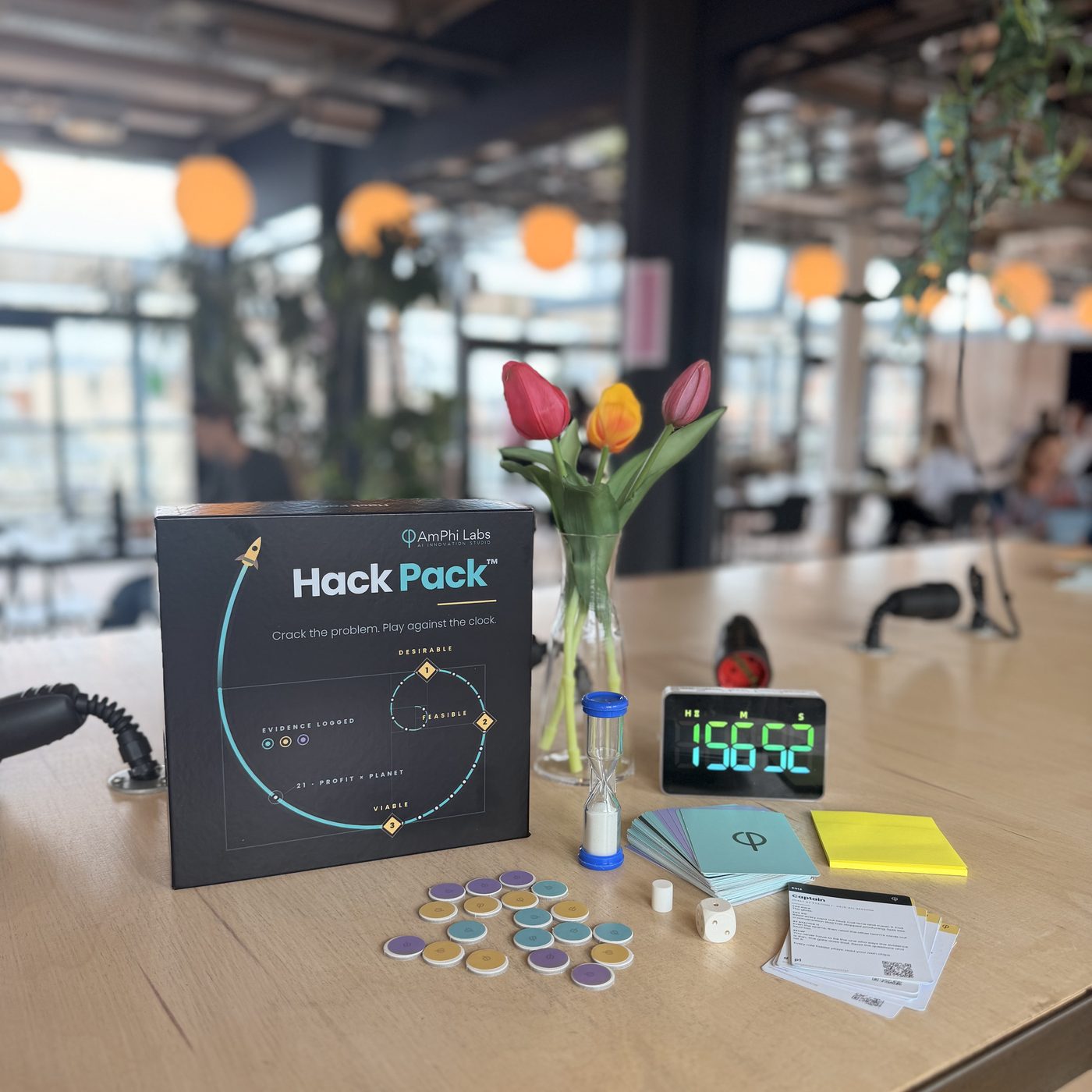
Every team plays the Hack Pack™, agile innovation in a box: 21 stations and 3 gates, from problem to validated idea by 16:00.
New to hackathons? See how it works ↓

Accelerating innovation through AI.
Paulo Oliveira, Global Innovation and Technology Manager at IKEA, opens the first Sustainable Packaging Hackathon straight after the problem briefings, before the teams start building.

Senior Packaging Engineer, Smurfit Westrock

Biomaterial researcher, SHR Wageningen
Capital C, Singel 542, Amsterdam. Free seat, by application. No coding needed.
After the day, our engineer spends it turning the winning idea into a working MVP and shows it to the brand.
Every solution goes in the November report, with your names on it.
PPWR sets a stack of deadlines for 2030: recyclability grades, empty-space limits, reuse targets, recycled content. We start with the one hackers and brands asked for most in this first edition: swapping the plastic.
How might we speed up the swap of a plastic or multilayer pack to fibre-first, so it keeps its shelf life and line speed, and a recycler can actually sort it? Teams answer with a real digital solution, built on real data.
And while the pack is open, size it to the product: less air means less board, more per pallet, and inside the 2030 void cap.
Every team works all four
Which fibre or biomaterial does the plastic’s job with the least material?
Oxygen, moisture and grease barrier, without PFAS and without killing recyclability.
Fold, seal, form and fill on today’s line, at today’s speed.
A sorter recognises it and a paper mill can repulp it.
Mixed teams take a real problem and build something that works before the clock runs out. The classic runs two days. Ours is the express version: one afternoon, tools down at 15:45.
At MIT in 1955 a hack was an inventive fix made with whatever was to hand. A hackathon is a marathon of those. Nobody breaks into anything.
Read more in our new blog: Hackathon, the power of collective innovation ›
Every team ends the afternoon with something that runs on real data: an app, an ML pipeline or an AI agent. What it does is up to the team. The questions it could answer:
Find the right fibre and barrier faster than trial and error.
Know the pack holds the product before the first line trial.
Show that a sorter and a paper mill will take it.
Keep today’s line speed with a new material.
Pick the way in that suits you. Hacking is free, and our sponsors cover the cost of the day.
Packaging, materials, recycling, design, engineering, students. No coding needed: the AI engineer in your team builds what you decide.
Apply for a free seat →Bring a plastic pack you want out of your range. A team from across the chain works on it. You keep every result.
See what it takes →Work on your customers’ open problems before they become tenders. Named on the published track winner.
See the packages →Only coming for the finale? From 16:00: pitches, prizes, demo floor and networking drinks, €50 per visitor. Book a visitor ticket →
A problem you cannot put your name to? Post it anonymously in the pain pool →
Hackers, brands, sponsors and visitors all start here, with one short form that takes about two minutes. Hacking seats are free, and we only have a limited number of them.
Hackers: we confirm your seat and team in October. Coming alone is fine.
Brands and sponsors: we set up a 30-minute call to shape the brief together.
Visitors: we send you a payment link for your ticket.
Want the detail first? Sponsor a track, set a challenge or hack a problem.
Fund a track, or set a challenge. Let’s talk.
Propelled by AmPhi Labs, an AI innovation studio in Amsterdam with deep packaging and paper expertise. Tetrik supplies the data for sizing packs to the product.
